Mini-Split vs. Central AC: Which Is Best for Your Home?
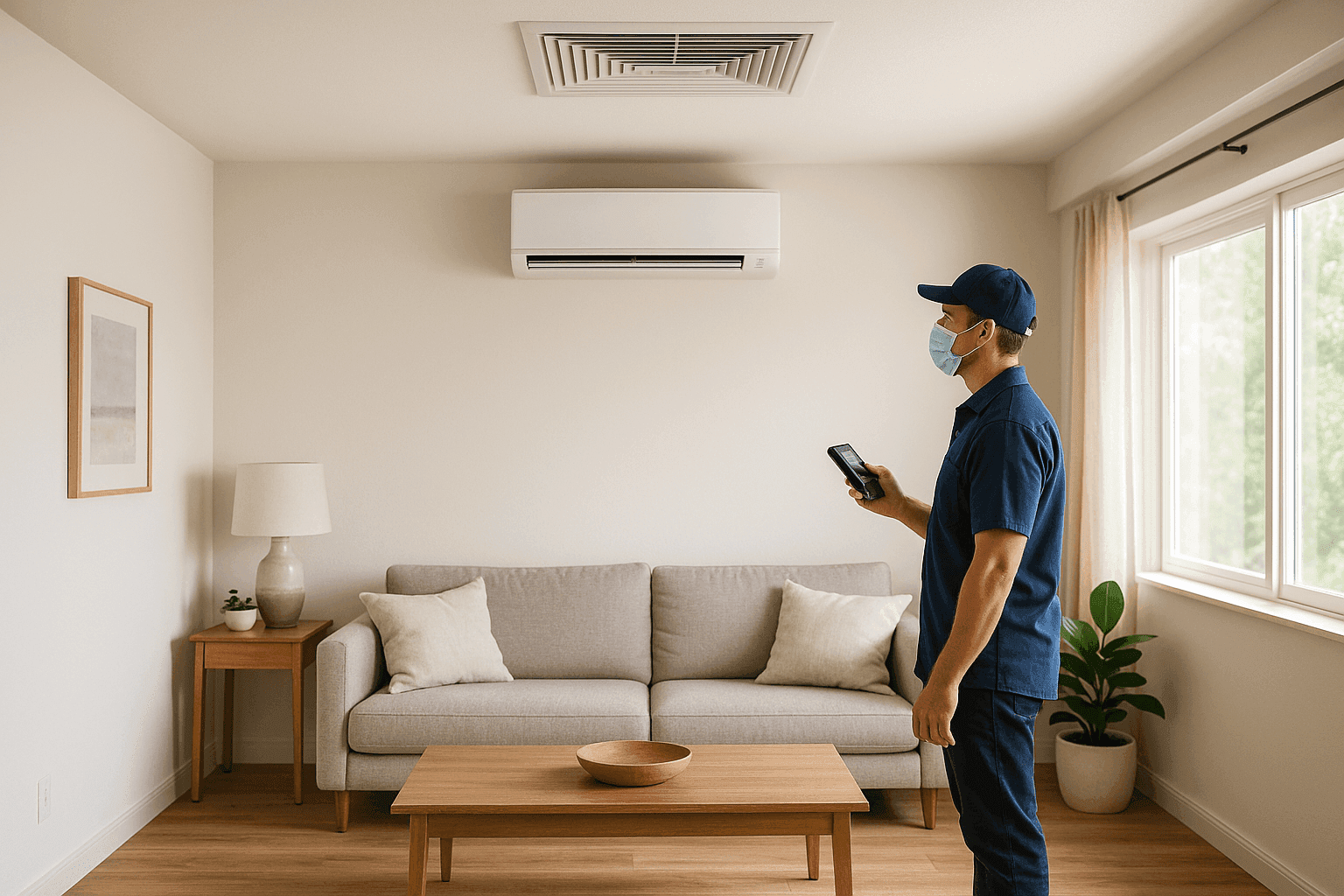
Sweat on your brow. AC humming in the background—or maybe it’s not, and you’re stuck in a muggy house, searching for answers. Whether your old system is failing or you’re building from scratch, you face a choice: mini-split or central AC? It’s a question that impacts comfort, budget, and even the look of your living room.
At Ash Joe’s Cooling & Heating, we know every home has its own story. We help neighbors every day—sometimes in the middle of the night—with emergency hvac. Let’s clear up the confusion so you can make a decision that keeps your home cool, your family comfortable, and your wallet happy.
How Each System Works 🧊
Understanding the basics puts you in the driver’s seat.
Central AC
Central air conditioning works a bit like the lungs of your home. It uses one main cooling unit (the “heart”) and a network of ducts (the “veins and arteries”) to move cooled air into every room. A single thermostat controls the entire system.
- Air flows: Returns pull warm air from rooms, send it through the AC, and distribute cooled air through supply vents.
- Ducts matter: Ductwork is hidden in walls, floors, or ceilings.
- Whole-home cooling: Everything is set to the same temperature—unless you have zoned ductwork.
Mini-Split Systems
Mini-splits are more like a personalized fan in every room, but supercharged and whisper-quiet. Each indoor unit connects to an outdoor compressor using small pipes. No ductwork needed.
- Individual control: Each room or zone has its own temperature setting.
- Flexible placement: Wall, ceiling, or floor-mounted options.
- Great for additions: No need to tear into walls for ducts.
Pros and Cons
No single system is perfect. Here’s the good, the bad, and the honest.
Central AC: Pros
- Consistent cooling: Every room gets cooled evenly (if ducts are balanced).
- Hidden design: Only vents and a thermostat are visible.
- Can add heating: Many systems can also provide heat.
Central AC: Cons
- Ductwork required: Not ideal if your home doesn’t have existing ducts.
- Air loss: Duct leaks can waste energy—up to 30% per U.S. Department of Energy.
- Less flexible: Cooling all rooms, even empty ones.
Mini-Split: Pros
- No ducts needed: Perfect for older homes, additions, or converted spaces.
- Room-by-room control: Save energy by only cooling rooms you use.
- Easy installation: Less invasive than running new ducts.
Mini-Split: Cons
- Visible units: Wall units aren’t hidden like vents.
- Higher upfront cost per zone: More units can mean higher initial investment.
- Aesthetics: Some homeowners dislike the look of indoor units.
Cost Comparison
Let’s talk dollars and sense.
- Central AC: Installation often costs less if your home already has ducts. If not, adding ductwork can get expensive—think of it like adding plumbing to every room.
- Mini-Split: Higher upfront price per room, but no ductwork saves on labor and future maintenance.
- Operating costs: Mini-splits are usually more efficient. They don’t lose cooled air in ducts. Energy Star says ductless systems can save 30% on cooling bills in some homes.
Tip: Air Balancing near you can optimize either system, making sure every room feels just right.
Ideal Home Types
Not all homes are built the same. Your layout matters.
-
Central AC fits best in:
- Newer homes with existing ductwork
- Large, open floor plans
- Families wanting even, whole-home temperatures
-
Mini-Splits shine in:
- Older homes without ducts
- Additions, garages, sunrooms, or attics
- Homes needing different temps in different rooms (nursery, office, bedrooms)
Installation Timelines 🛠️
- Central AC: If ducts are in place and in good shape, install time is usually 1–2 days. Adding or replacing ducts? It can stretch to a week or more, depending on home size and complexity.
- Mini-Split: One to two days for most projects, even less if you’re adding just one or two zones. Minimal disruption to walls and ceilings.
Building codes require permits for both systems. The International Residential Code (IRC) and local authorities have the final say—professional installation keeps you safe and compliant.
Maintenance Needs
Your AC should be like a good friend—reliable, but it needs attention now and then.
Central AC
- Annual HVAC maintenance: Cleaning coils, checking refrigerant, inspecting the blower.
- Duct cleaning: Every few years or as needed, especially if you have pets or allergies.
- Filter changes: Monthly or as recommended.
Mini-Split
- Filter cleaning: Most units have washable filters—clean every month.
- Outdoor unit care: Keep it clear of debris and plants.
- Professional tune-ups: At least once a year. More often if you have pets or allergies.
Both benefit from emergency hvac support if you notice unusual sounds, leaks, or performance drops.
Climate and Region Considerations
Where you live shapes your cooling needs.
- Hot, humid climates: Central AC often wins for large homes, but mini-splits handle smaller spaces or additions beautifully.
- Mild or variable climates: Mini-splits with heat pumps provide both cooling and heating, perfect for spring and fall swings.
- Dusty or allergy-prone areas: Both systems need regular filter changes. Mini-splits can offer advanced air filtration and air scrubbers.
Local building codes (refer to the U.S. Department of Energy and ACCA Manual J guidelines) set standards for system sizing and installation.
Energy Efficiency
Energy bills can creep up like a slow leak. Here’s what to expect:
- Mini-splits: Usually more efficient. No ducts, no leaks, and inverter technology adjusts output to match demand.
- Central AC: Efficiency depends on ductwork and system age. Modern systems with variable-speed blowers are much improved.
Look for systems with a high SEER (Seasonal Energy Efficiency Ratio) rating. The higher, the better.
Aesthetic Impact 🎨
Some folks love a clean look. Others don’t mind seeing the system.
- Central AC: Out of sight, out of mind. Only small vents and a thermostat show.
- Mini-Split: Wall, ceiling, or floor units are visible indoors. Some are sleek and modern, but it’s a personal preference.
Practical Tips
- Have your ductwork inspected for leaks before replacing a central AC.
- Think about how many rooms you want to control separately. Mini-splits excel at this.
- Ask a pro about local rebates—many utilities offer incentives for high-efficiency systems.
- For emergency hvac outages, know where your system’s power shutoff is located.
- Schedule regular tune-ups, especially after heavy use or seasonal changes.
FAQ
Q: Can I install a mini-split or central AC myself?
A: Both systems should be installed by licensed professionals. Handling refrigerants and electrical work isn’t a safe DIY project.
Q: Will a mini-split heat my home, too?
A: Most modern mini-splits are heat pumps, so they can heat and cool. Check that the model suits your winter temps.
Q: How do I know what size system I need?
A: Sizing is based on square footage, insulation, windows, and more. The ACCA Manual J calculation is the national standard.
Q: What about indoor air quality?
A: Both systems can support advanced filtration, humidifiers, and air scrubbers. Regular filter changes are key.
Local and Seasonal Considerations
Every region has its quirks: summer storms, dust, wild temperature swings. If you live in an area with frequent power outages, consider generator installation or maintenance to keep your comfort on track. High humidity? Dehumidifiers and regular duct cleaning help both mini-split and central AC systems perform their best.
The Bottom Line
Your home is unique. Your cooling should be, too. At Ash Joe’s Cooling & Heating, our job is to match the right system to your needs—whether that’s a whisper-quiet mini-split or a powerful, whole-home central AC.
Want help deciding? Need emergency hvac fast?
Call Ash Joe's Cooling & Heating now — or reach us anytime at 888-854-9575 .